


Digital marketing keeps evolving at a pace we have not seen before. Things are moving quicker all the time. Now 2026 brings in this fresh period of smart expansion for everyone involved. Companies face big changes in pulling customers closer, talking to them better, and making sure they stick around. Automation leads the charge, along with artificial intelligence and strategies built on solid data. Marketing ahead looks beyond just being online. It turns predictive, sharp, and custom fit for each person.
This big change has really altered the way brands create visibility and build trust. Companies that manage to adjust to it end up seeing success like never before. We can take a look at how digital marketing in 2026 changes the whole game for growing a business.
AI Turns into the Heart of Digital Marketing Plans

By 2026 AI marketing tools have transitioned from being extras, to the cornerstone of all successful marketing plans. Artificial intelligence currently examines behavior forecasts customer demands and automates activities that once needed marketing staffs.
Artificial intelligence is transforming marketing through:
- Anticipating customer desires prior, to their search
- Automating content creation and optimization
- Enhancing ad targeting for higher ROI
- Personalizing the full customer journey
- Providing real-time analytics and insights
The outcome? Companies expand intelligently rather than exerting more effort. Through automation brands are able to accelerate growth while minimizing manual labor.
Hyper-Personalization Turns into the New Norm
By 2026 personalization extends beyond simply including a customers name in an email. Utilizing analytics, brands today provide highly tailored experiences at every digital interaction point.
Instances consist of:
- Customized product recommendations
- Dynamic website content
- Behavior-triggered email sequences
- Personalized video and social content
Customers anticipate relevance, quickness and uniqueness—and companies that provide these experiences secure loyalty and improved conversion rates. That is why tailored marketing is an approach for firms such, as Anra Solutions.
Voice Search and Conversational Marketing Dominate

With the integration of voice assistants into routines optimizing for voice search has gained significant importance. By 2026 50% of all internet searches are conducted via devices, with voice capability.
To maintain their edge brands focus on optimizing:
- Conversational keywords
- Natural language queries
- Question-based search terms
- AI-powered chatbots
The change in SEO patterns, for 2026 demands that companies produce content which feels authentic, relatable and conversational.
Immersive Digital Experiences Rise

In 2026 consumers desire participatory digital experiences. Consequently brands have incorporated AR, VR and 3D interactive content into their marketing strategies.
Significant immersive marketing developments encompass:
- AR-powered product previews
- VR shopping environments
- 3D site graphics
- AI-generated video content
These advancements improve customer interaction and foster connections, between brands and consumers.
Social Media Transforms into a Smart Commerce Network

Social media sites have transformed into commerce centers fueled by AI. Than merely browsing users currently purchase, engage and take part in customized content feeds enabled by machine learning.
Key transformations in social media marketing, by 2026 encompass:
- Creator-led product experiences
- Micro-community engagement
- Smart social ads targeting real behavior
- AI-driven content recommendations
Brands that foster connections and dedicate resources to community-focused content have the potential to stand out amidst the clutter, on competitive platforms.
Data-Driven Marketing Powers Smarter Decisions
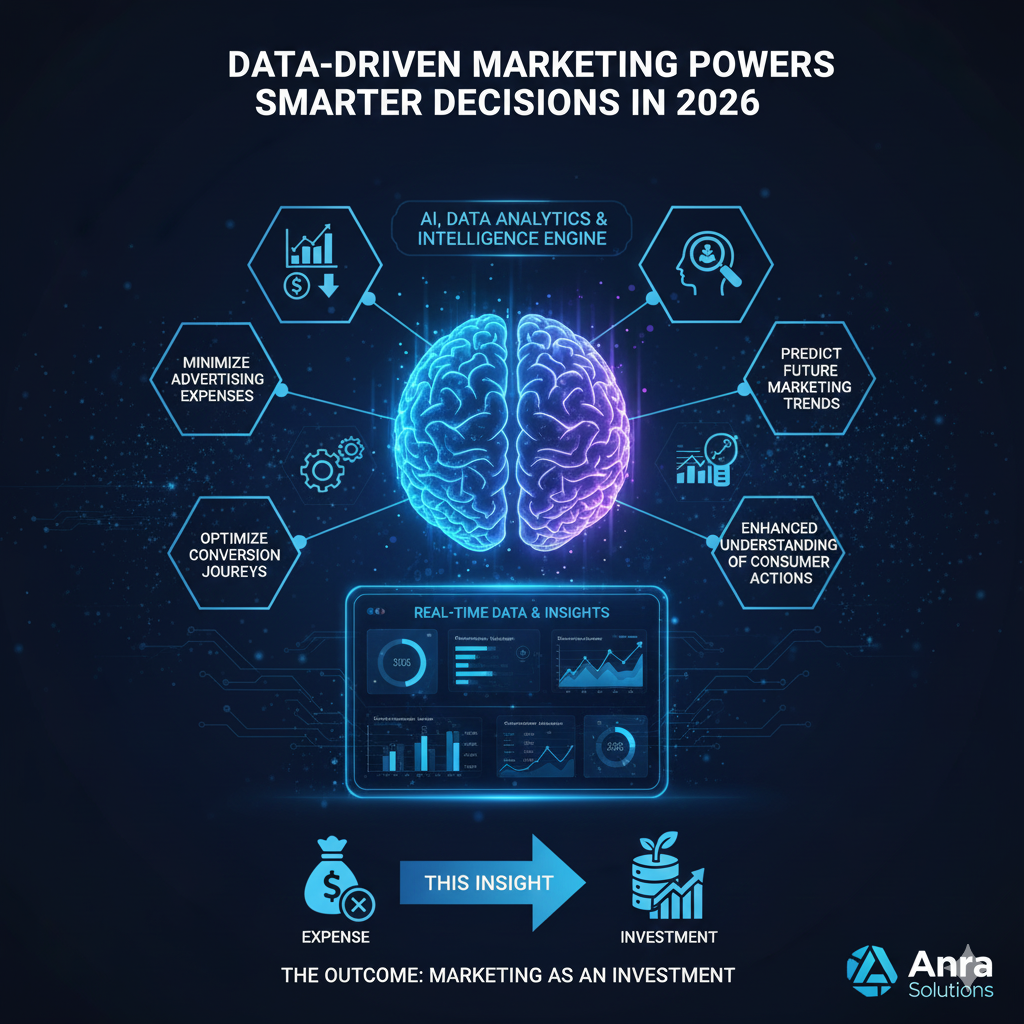
At the core of marketing 2026 lies data—accurate, immediate and practical data. Leveraging analytics tools companies obtain enhanced understanding of consumer actions, performance indicators and conversion journeys.
Marketing based on data assists brands:
- Minimize advertising expenses
- Improve customer targeting
- Strengthen decision making
- Predict future marketing trends
This insight transforms marketing from an expense into an investment.